
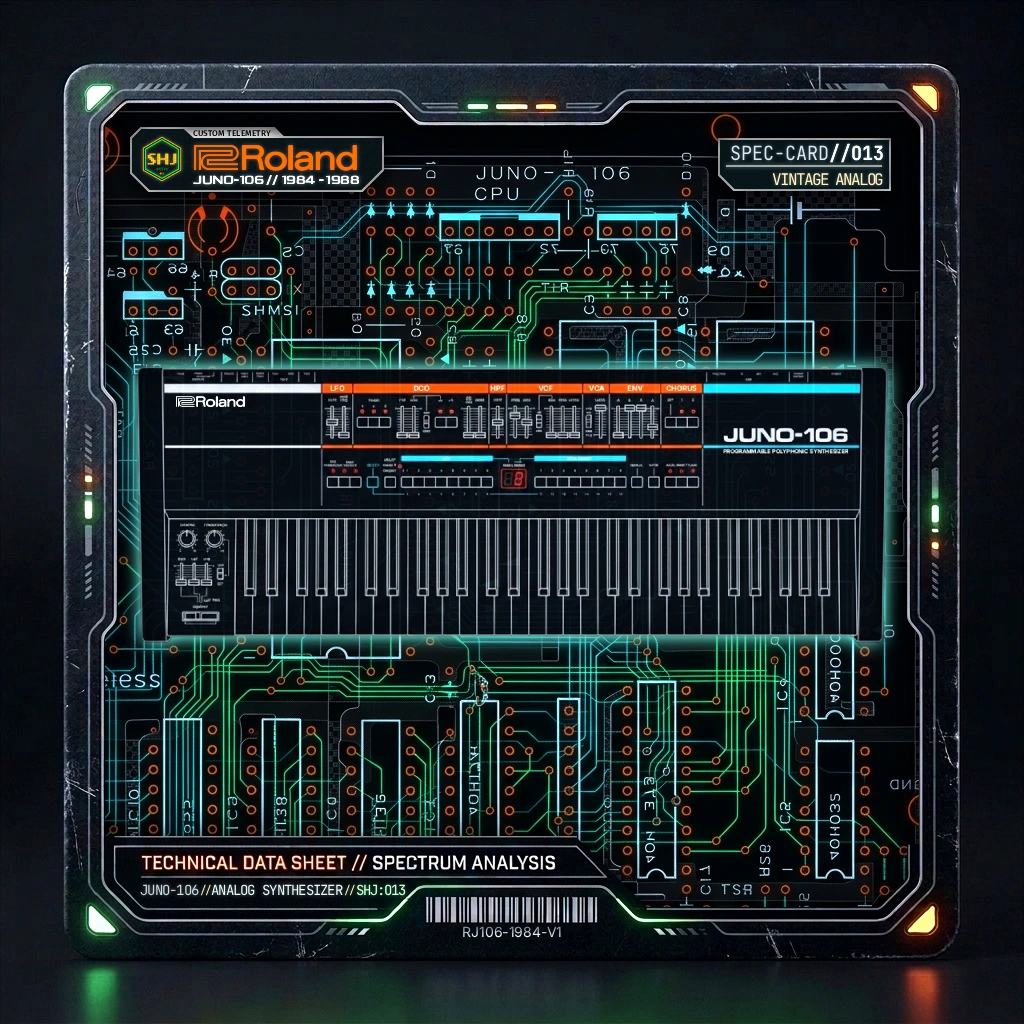
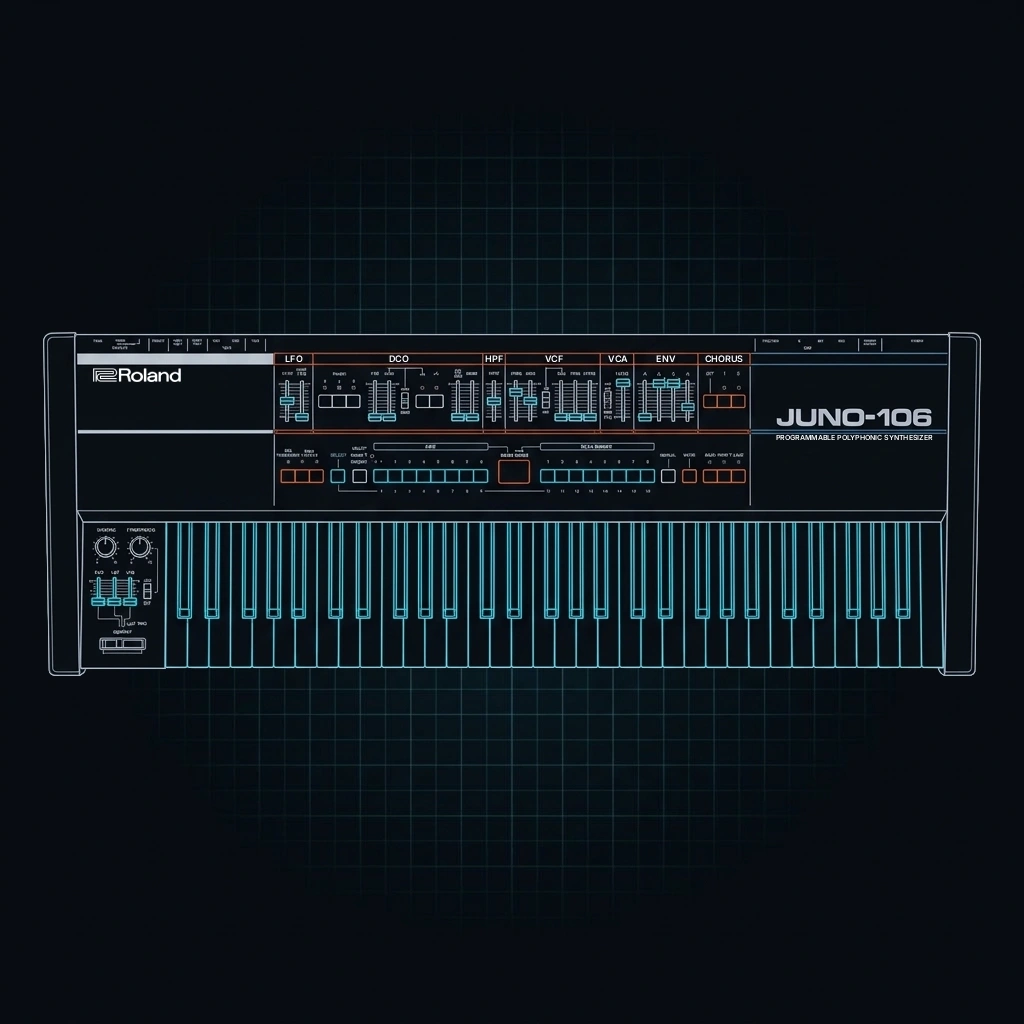
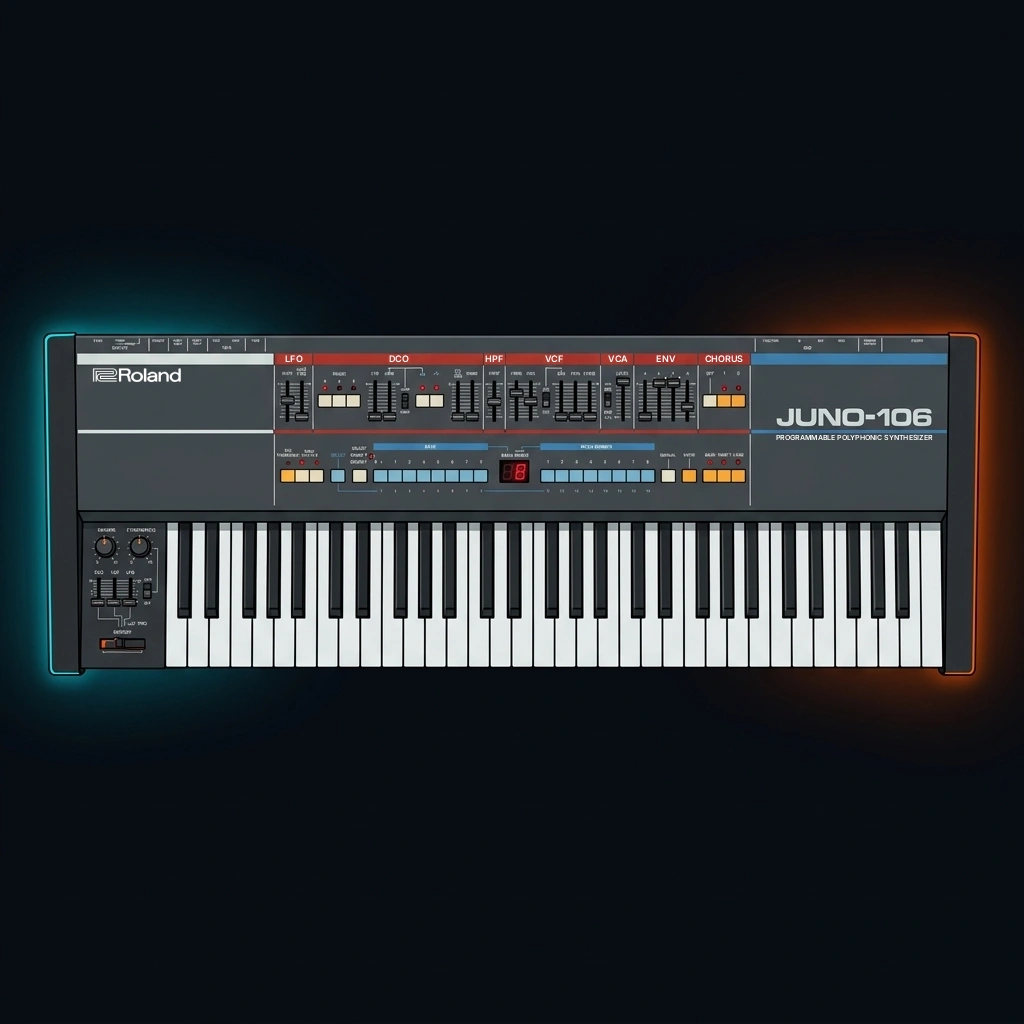
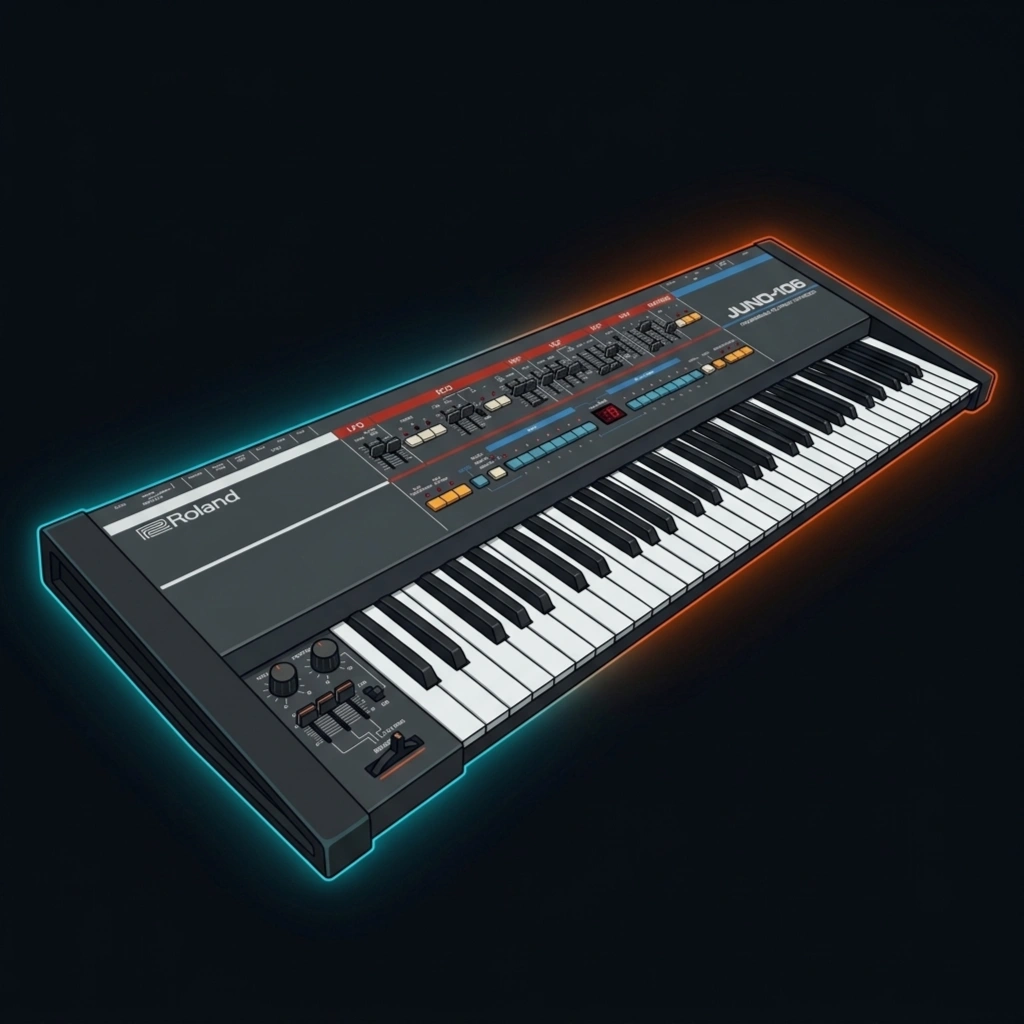

The Quintessential Poly-Synth of the MIDI Era: Pure Analog Warmth, Tactile Slider Architecture, and the Immortal Stereo BBD Chorus
Introduced by Roland in Tokyo in 1984, the Roland Juno-106 stands as one of the most beloved, commercially successful, and musically influential analog polyphonic synthesizers ever conceived. Arriving as the third iteration of the storied Juno dynasty, the 106 perfected the formula: combining the warmth and raw power of genuine analog synthesis with rock-solid digital pitch stability and complete, bidirectional MIDI implementation. In doing so, Roland provided musicians with an affordable, ultra-reliable poly-synth that could integrate seamlessly into the emerging digital studio environments of the mid-1980s.
At the heart of the Juno-106‘s sonic dominance is its hybrid architecture: six digitally controlled analog oscillators (Roland MC55344 hybrid DCO modules) driving six discrete 24dB/octave resonant low-pass filters and analog VCAs (Roland 80017A hybrid ICs). With one tactile slider per parameter, the instrument eliminated tedious menu-diving in favor of pure, immediate physical sound sculpting. To elevate its single-oscillator-per-voice design into a massive stereo soundstage, Roland integrated their legendary dual-mode analog Bucket Brigade Device (BBD) stereo chorus circuit, instantly transforming dry basses and leads into lush, swirling polyphonic textures.
From the moment of its release, the Juno-106 became an indispensable acoustic anchor across global music production. In Chicago, house music pioneers Frankie Knuckles and Larry Heard weaponized its punchy sub-oscillator basslines and warm chord stabs to define the genre. In the UK and Europe, electronic visionaries from Daft Punk and The Chemical Brothers to Depeche Mode made the Juno-106 a studio cornerstone. As a physical pillar of music history, its warm, buttery pads, punchy plucks, and singing resonance have graced tens of thousands of hit records spanning four decades.