
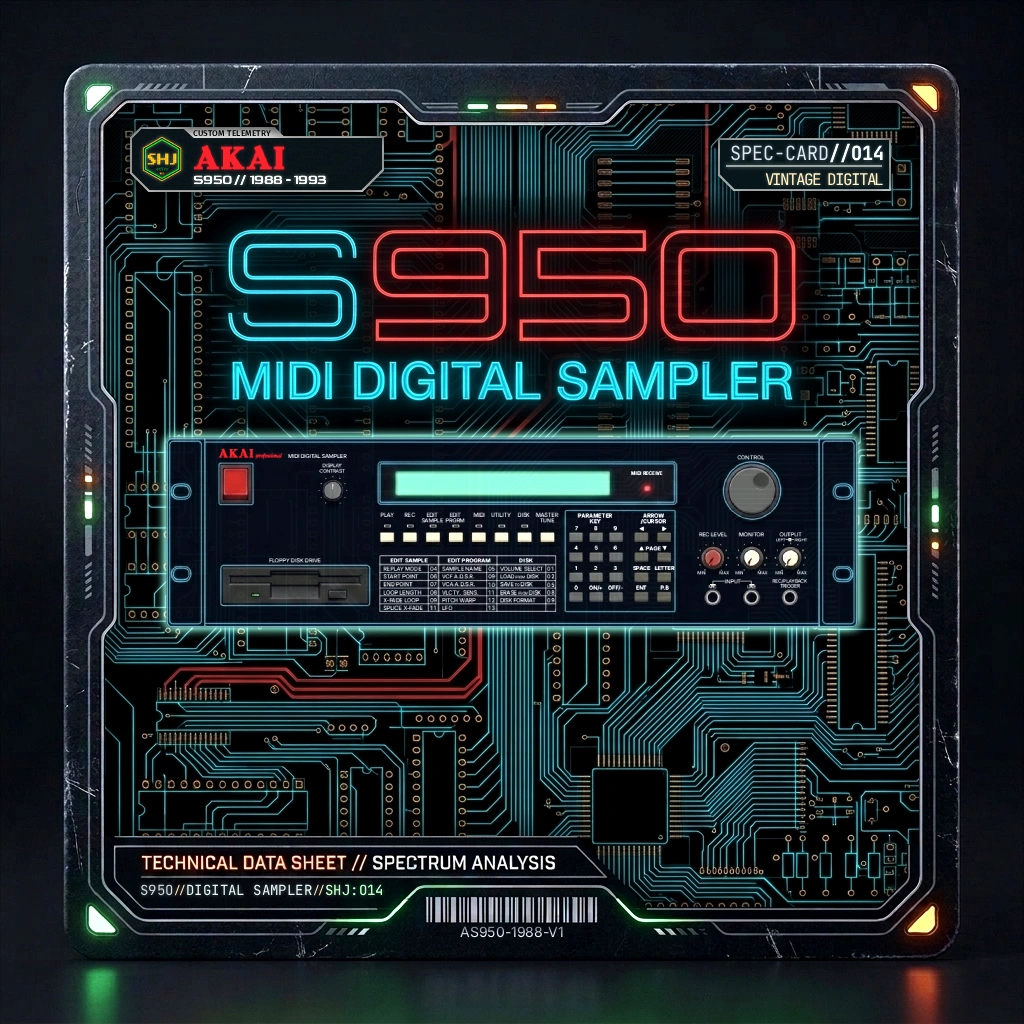
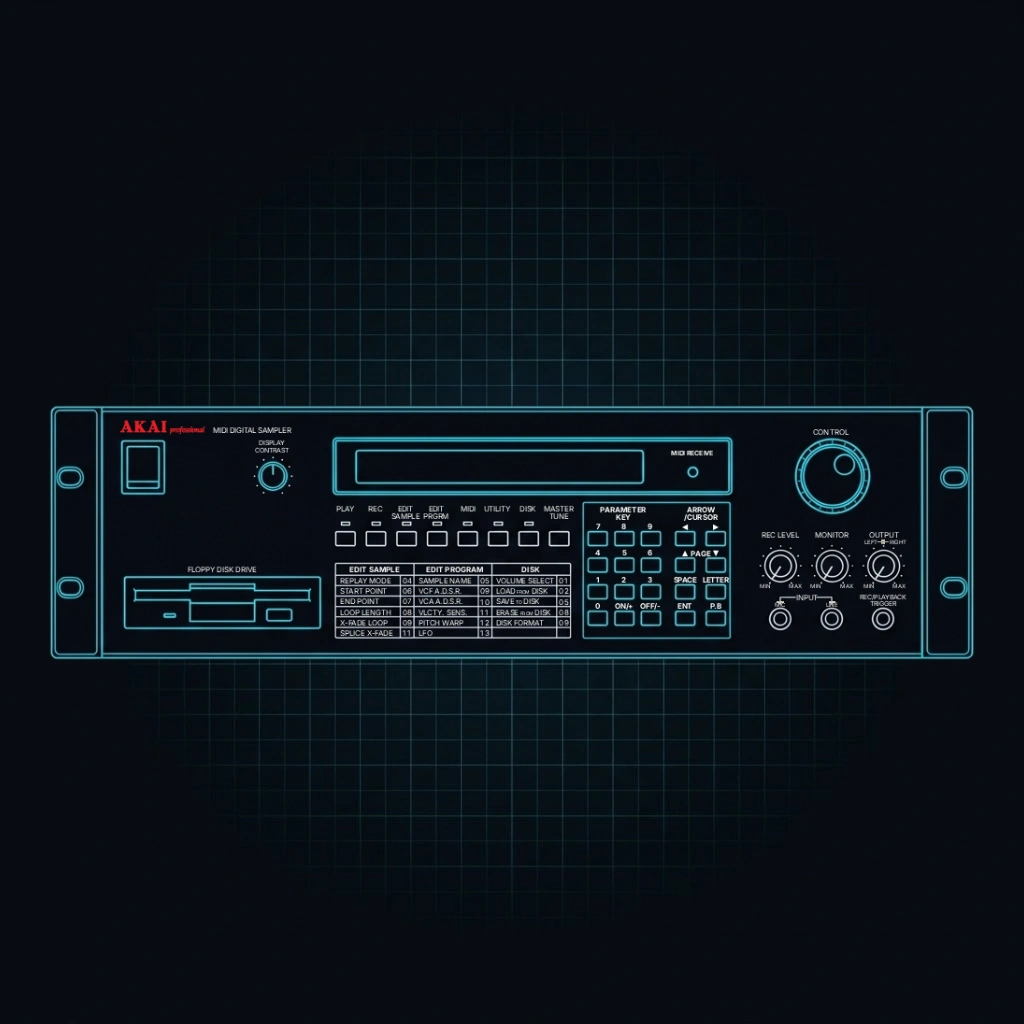
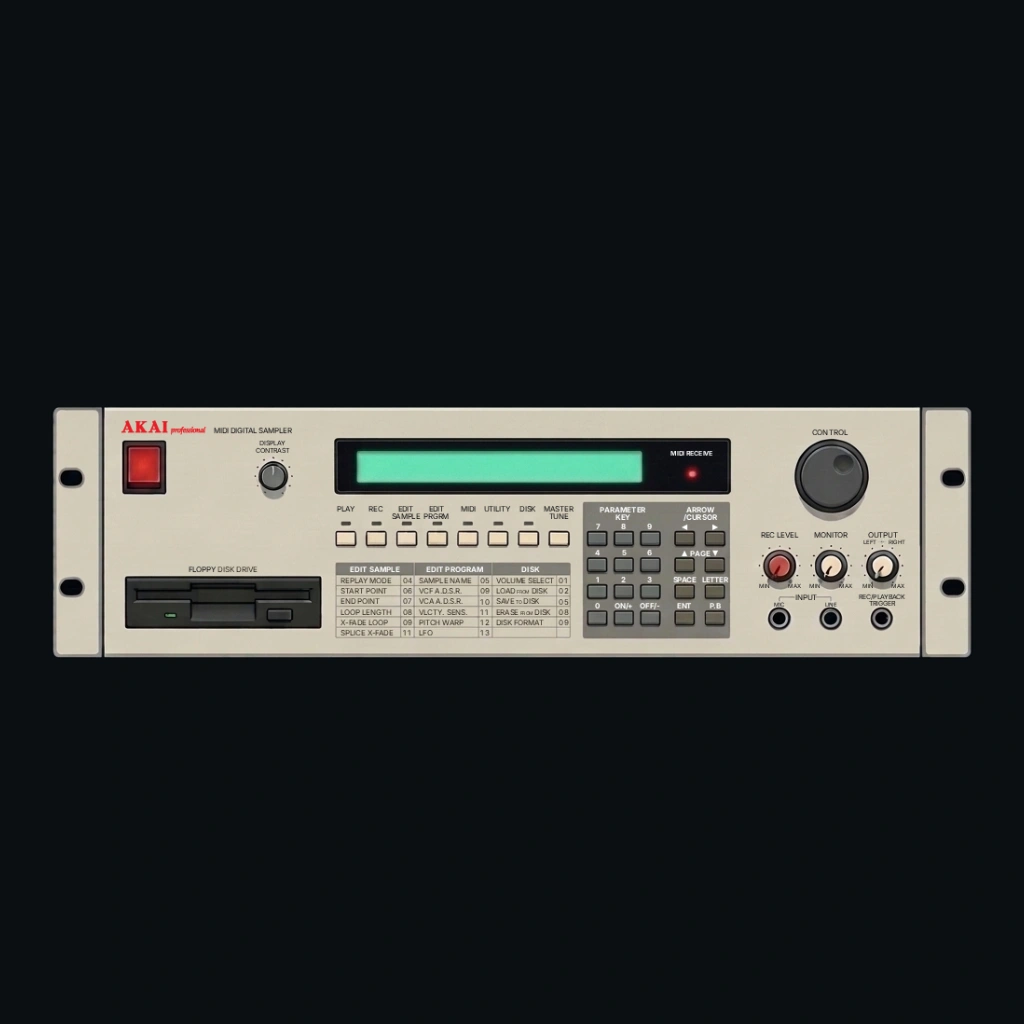

The 12-Bit Masterpiece of Jungle and Boom-Bap: Switched-Capacitor Filter Sweeps and the Iconic Timestretch Engine
Released by Akai in Tokyo in 1988, the Akai S950 stands as the undisputed king of 12-bit professional studio samplers: a rugged, over-engineered 3U rackmount powerhouse that permanently transformed the sonic landscape of modern music. Building upon the runaway success of its S900 predecessor, Akai took their flagship 12-bit architecture and supercharged it with an expanded variable sampling range up to 48kHz, expandable RAM capacity up to 2.25MB, an Intel 80186 central processor, and the world’s first hardware-implemented digital timestretch algorithm.
What makes the S950 an immortal studio weapon is the interplay between its conversion stage and its analog filtering. The sampler utilizes a high-precision 12-bit non-interpolated sampling engine paired with Burr-Brown PCM54HP linear digital-to-analog converters. When producers pitched down breakbeats or vinyl chops, the machine imparted a raw, punchy transient snap and mid-frequency crunch that no modern 24-bit DAW can replicate. Crucially, each of its eight individual voice outputs is routed through a discrete National Semiconductor MF6CN-50 6-pole (36dB/octave) switched-capacitor analog low-pass filter, delivering deep, resonant sweeps that roll off high frequencies with unmistakable warmth.
Across the 1990s, the S950 became the definitive engine behind two seismic musical movements. In New York, golden-era hip-hop architects DJ Premier and Pete Rock used its punchy converters to give drum breaks their trademark boom-bap knock. In London, drum and bass pioneers Goldie, Liam Howlett of The Prodigy, and Rob Playford pushed its timestretch algorithm to extreme limits, inventing the metallic, shuttering vocal artifacts and elastic amen breaks that defined jungle. As a physical pillar of music history, the S950 remains an essential hardware cornerstone of electronic and urban music.