Akai MPC3000: The Ultimate 16-Bit Production Engine, The V53 Coprocessor, and the Uncompromising Roger Linn Clock That Defined 90s Groove
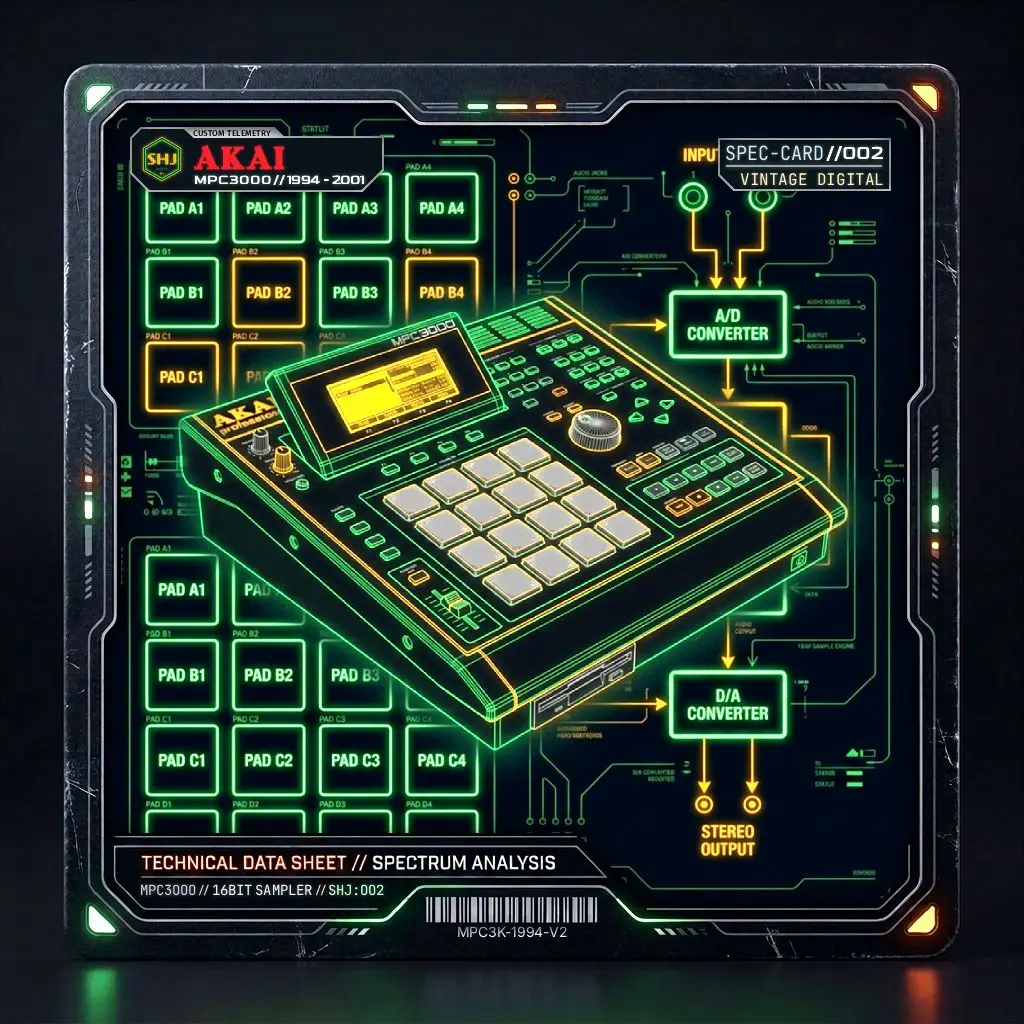
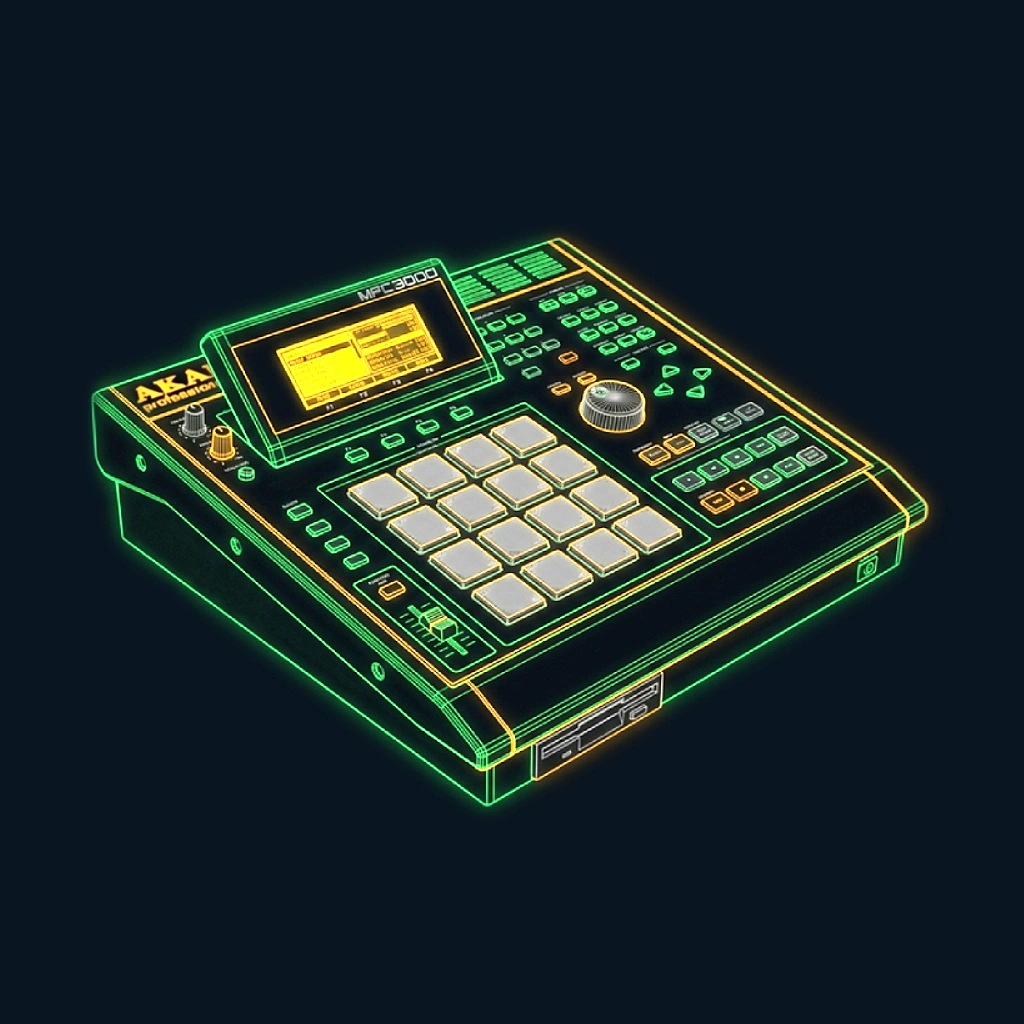
The Akai MPC3000 is not merely a sequencer-sampler; it is the physical heartbeat of modern hip-hop, R&B, and house production. Released in 1994 as the absolute pinnacle of the legendary collaboration between Akai Professional and design pioneer Roger Linn, the MPC3000 took the intuitive, performance-based workflow of the MPC60 and rebuilt it with a high-resolution, stereo 16-bit linear engine operating at a fixed 44.1kHz sampling rate. By pairing this high-fidelity sound path with a solid-steel chassis, 16 highly responsive dynamic pads, and a tilting high-contrast LCD display, Linn bypassed the sterile grids of early computer sequencers. The result was a self-contained production powerhouse that defined the legendary “knock” and unquantized swing of 90s gold-standard music.
Under the hood, the MPC3000’s timing engine represents a masterclass in low-latency embedded systems design. Driven by a high-speed NEC V53 microprocessor operating as a dedicated system-on-a-chip, the MPC3000 bypasses the complex, multi-layered operating systems of modern computers, managing MIDI and pad-trigger interrupts at the hardware level. This achieves an ultra-tight, sub-millisecond timing accuracy that musicians physically feel. For conversion, the S3000-derived analog-to-digital path is paired with an uncompromising digital-to-analog stage utilizing separate, premium Analog Devices AD1865 18-bit dual-channel DACs. By avoiding multiplexed DAC layouts, the MPC3000 maintains immaculate stereo phase coherence, wide dynamic range, and a highly punchy transient response.