
Akai MPC3000: The Ultimate 16-Bit Production Engine, The V53 Coprocessor, and the Uncompromising Roger Linn Clock That Defined 90s Groove
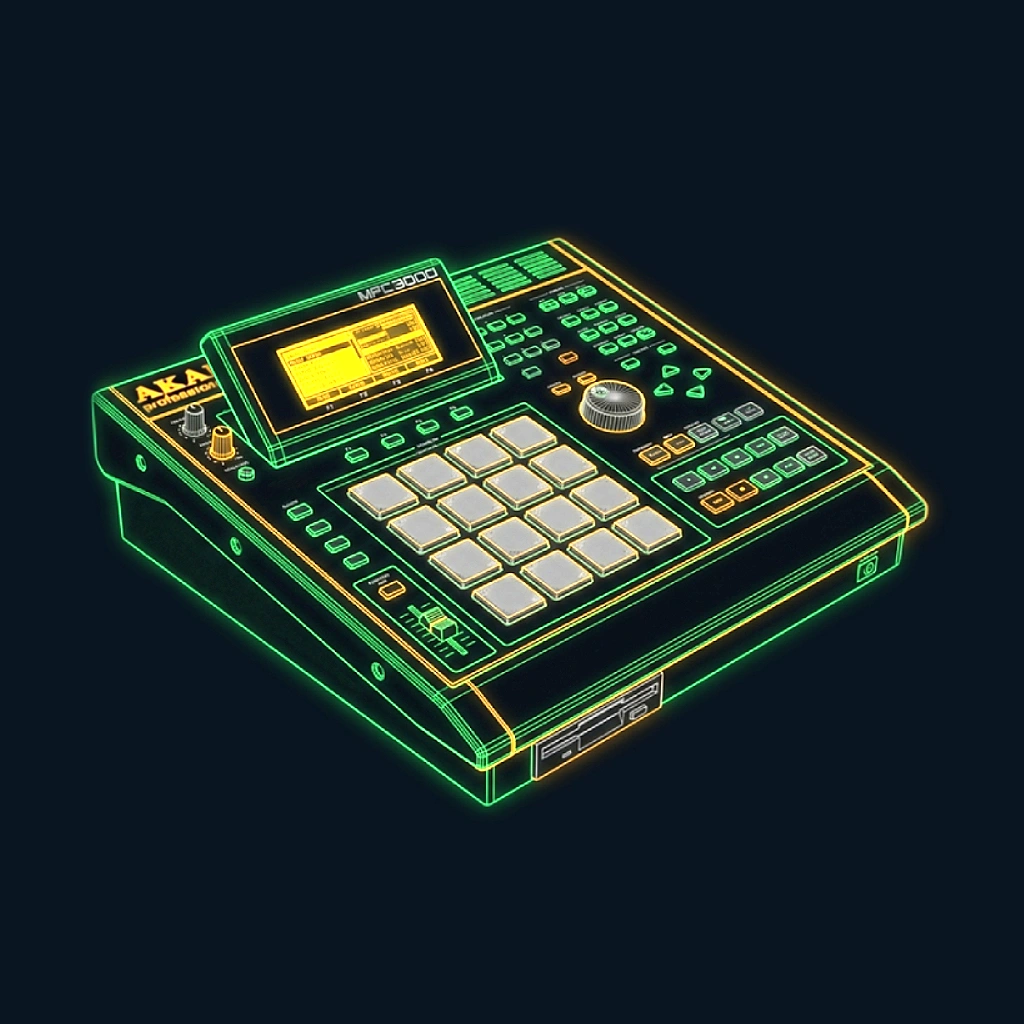
The Akai MPC3000 is not merely a sequencer-sampler; it is the physical heartbeat of modern hip-hop, R&B, and house production. Released in 1994 as the absolute pinnacle of the legendary collaboration between Akai Professional and design pioneer Roger Linn, the MPC3000 took the intuitive, performance-based workflow of the MPC60 and rebuilt it with a high-resolution, stereo 16-bit linear engine operating at a fixed 44.1kHz sampling rate. By pairing this high-fidelity sound path with a solid-steel chassis, 16 highly responsive dynamic pads, and a tilting high-contrast LCD display, Linn bypassed the sterile grids of early computer sequencers. The result was a self-contained production powerhouse that defined the legendary “knock” and unquantized swing of 90s gold-standard music.
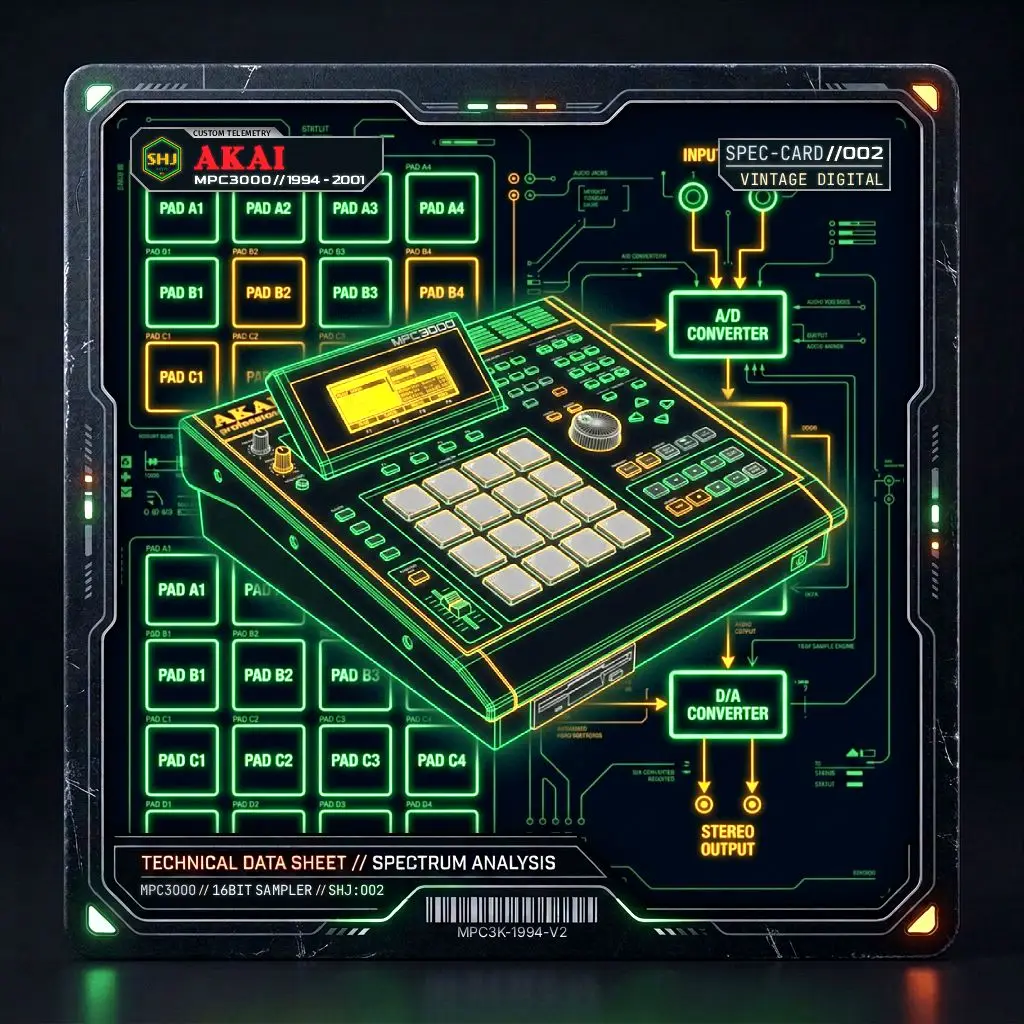
Under the hood, the MPC3000’s timing engine represents a masterclass in low-latency embedded systems design. Driven by a high-speed NEC V53 microprocessor operating as a dedicated system-on-a-chip, the MPC3000 bypasses the complex, multi-layered operating systems of modern computers, managing MIDI and pad-trigger interrupts at the hardware level. This achieves an ultra-tight, sub-millisecond timing accuracy that musicians physically feel. For conversion, the S3000-derived analog-to-digital path is paired with an uncompromising digital-to-analog stage utilizing separate, premium Analog Devices AD1865 18-bit dual-channel DACs. By avoiding multiplexed DAC layouts, the MPC3000 maintains immaculate stereo phase coherence, wide dynamic range, and a highly punchy transient response.
Akai MPC3000 Sonic Heritage: Pop Culture Icons & Masterclass Tracks

The Akai MPC3000 became the gritty heartbeat of the streets and the undisputed gold standard for groove-based production. Famous for its legendary “swing,” thick analog converters, and the raw sequencing soul designed by Roger Linn, this iconic sampler provided the heavy-hitting punch and rhythmic pocket behind the most influential hip hop, house, and underground anthems ever pressed to vinyl.
In this playlist, Synth Hunter Japan dives into the tracks where the MPC3000’s unmistakable timing and sampling grit redefined the art of the beat. From the surgical chopping of the legendary “Amen Break” to the soulful boom bap that shaped a generation, discover how this Japanese powerhouse gave producers the tools to flip samples into history. Whether you’re a crate digger or a gear head, experience the machine that brought the funk back into the digital age.
- J Dilla (Jay Dee): Programmed his legendary, unquantized swing templates and warm, heavily-saturated R&B beats for Slum Village and Common entirely on the MPC3000, exploiting its massive head-room and direct sampling path.
- Dr. Dre: Relied on the MPC3000 as the primary drum machine and sequencing brain for “2001” (1999). He famously stacked kick and snare transients through its high-headroom AD1865 outputs to achieve that legendary, crystal-clear, hard-hitting West Coast boom-bap knock.
- The Alchemist: Crafted his signature dark, dusty loops and crisp, upfront drum tracks using the MPC3000‘s tight, high-precision timing loop.
- DJ Shadow: Integrated the MPC3000 into his live performances and studio setups, sequencing multiple samplers with absolute, sub-millisecond sync precision.
- Moodymann (Kenny Dixon Jr.): Built his deep, soulful, and heavily swung Detroit house tracks by feeding dusty jazz cuts and vocal hooks into the MPC3000, driving the analog outputs into vintage consoles for a warm, saturated warmth.
Akai MPC3000 Architecture & Reliability: The Deep Dive
Owning an AKAI MPC3000 is a serious commitment to sampler history. Here are some core architectural details and physical considerations to keep in mind when investing in this legend:
- Features and Architecture: The MPC3000‘s punch is anchored by its dedicated dual Analog Devices AD1865 18-bit DAC layout. By dedicating separate DAC channels to its stereo output paths, it completely eliminates voice-to-voice crosstalk and phase smearing, delivering a massive, three-dimensional stereo soundstage. The digital filter section utilizes custom Akai LSIs to provide dynamic, low-pass filtering with variable resonance, allowing producers to sweep synth lines or warm up sampled loops without resorting to sterile, software-based plugins.
- Reliability Warning: A critical vulnerability unique to the MPC3000 is its SCSI controller bus. Due to the lack of hot-plug protection on 90s SCSI architectures, connecting or disconnecting external ZIP drives or SCSI-to-SD card readers while the unit is powered on will instantly blow the SCSI transceiver IC, rendering the storage bus completely dead. Additionally, surface-mount capacitors on the analog output board degrade over time, leading to low-frequency roll-off and noise, while the conductive carbon-pad sensor sheets beneath the rubber pads lose their sensitivity or double-trigger.
- Present Day Relevance: In a production landscape dominated by clinically perfect DAWs, the MPC3000 is a masterclass in tactical focus and physical feel. Operating as the master MIDI sync clock, its NEC V53-driven hardware timing engine stabilizes timing jitter across a hybrid studio setup, forcing a performance-driven workflow. Roger Linn’s proprietary swing algorithm shifts the timing of even-numbered 16th notes with a mathematical precision that emulates the natural micro-timing variations of an elite human drummer, breathing urgent, physical momentum into modern electronic arrangements.
Akai MPC3000 Technical Resources & Historical Bibliography
As we are building an archive based on technical integrity, I am providing some citations and further reading below.
🎙️ Akai MPC3000 Historical & Journalistic References
On 18-Bit Audio Topology & Low-End Swing: “The MPC3000 represents the absolute peak of Roger Linn’s hardware sequencer vision. By replacing the multiplexed 12-bit conversion of the MPC60 with separate dual 18-bit Analog Devices DAC paths, Linn engineered a machine that delivered a deep three-dimensional stereo image without losing that signature sub-millisecond hardware swing timing.” – Warren Cann, Sound on Sound Magazine, “Akai MPC3000 Revisited”.
On J Dilla’s MPC3000 Production Mechanics: “Dilla’s MPC3000 was a physical extension of his groove. By disabling the auto-quantization and manually timing his pads on the V53-driven hardware engine, he developed a signature unquantized R&B swing style that software plugins simply cannot mimic.” – Questlove, featured in Keyboard Magazine, 2006.